My iMac crashes on restart. How can I prevent this?

The Problem:

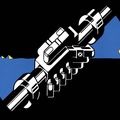
I have a Retina 5K 2019 iMac with an internal hard drive that crashed. I can now run it off an external hard drive, which has the latest Sequoia (15.6.1), and it runs fine, except when I try to restart. Every time I need to restart, I get this message:


If I do nothing, it tries again, only winding up in the same place.


I've figured out that I can restart it with the following procedure:

  1. Hold down Command-R when I start, which opens Recovery Mode.
  2. Open the Disk Utility
  3. Do a first-aid on my external hard drive, even though it doesn't need first aid.
  4. Go to the apple menu and choose the command to select the start up disk.
  5. It pops up a window to specify the startup disk, which only offers my external drive, which is pre-selected. Click the restart button in that window.


I don't know why I need to do first aid, but if I don't do that, it goes back to the same error screen. When I look at the output of first aid, it doesn't find any problems that it needs to repair.


What I've tried:


  1. I tried reformatting my external drive in the MS-DOS (FAT) format, in the hope that this would prevent it from trying to reboot from it. This didn't help.
  2. I noticed that I could still write files to the internal drive, so I reformatted my internal hard drive in APFS format and installed the OS on it, but whenever I try to restart from it, it crashes.
  3. I tried using Disk Utility to unmount the internal drive before rebooting. Didn't help.
  4. I added an fstab file to my /etc folder of my external drive. It has a single line: UUID=41C2BBBC-F5BB-4EF7-B097-ACECE80F6277 none apfs ro,noauto. This successfully prevents the internal drive from mounting once I've managed to restart it, but it doesn't help with restarting.
  5. I tried restarting in safe mode (to fix a different problem). But safe mode never comes up. I've tried both before going through my restart process, and in the last step of my restart process. Neither one works.


This is a pain in the buns. I want to be able to restart normally. The biggest problem shows up when I try to install the latest upgrade to the OS. After going through the whole upgrade process, it fails to restart. When I go through my usual restart procedure, I find that it didn't install the upgrade. Somehow, it works the second time.


I would appreciate any suggestions.


[Edited by Moderator]

iMac 27″, macOS 15.6
Posted on Sep 7, 2025 3:58 PM

Reply
Question marked as Top-ranking reply

Posted on Sep 11, 2025 5:53 PM

Miguel_Muñoz wrote:

"I would highly recommend erasing that failed internal Hard Drive…"
I did completely erase the drive. To erase a drive using Disk Utility, you need to specify a format, because it will reformat the drive as well. I don't see a way to erase without reformatting. Right now the drive is completely empty and unmounted, but it's still formatted for use.

FYI, here is an Apple article showing how to erase the physical drive. While the article focuses on an external drive, the same thing applies to the internal drive (Intel Macs only though, never do that to an internal SSD of an M-series Mac).

Erase and reformat a storage device in Disk Utility on Mac - Apple Support


FYI, Disk Utility erase is what is traditionally known as "reformatting". It also includes repartitioning if the physical drive is erased with macOS 10.11+. Apple went away from the traditional partitioning & formatting with macOS 10.11....trying to simplify things for users, but breaking with what other operating system traditionally do (even macOS prior to 10.11).


From everything you described prior to my previous post, it sure sounds like the internal drive is causing the problem (classic symptoms for it). If you did not erase the whole physical drive, then it is possible some bootloader is still being seen by the system as the system firmware scans the drives/volumes looking for possible bootable volumes. Erasing the whole physical drive is the easiest way, but writing zeroes to the beginning of the drive is better because it destroys the partition table making the drive appear blank so only the most minimal scan will be performed on that drive. Of course some Hard Drive failures can be severe enough to interfere with booting from any media even if the drive appears blank and a default Startup Disk is configured.


You can try a PRAM Reset followed by configuring the default Startup Disk just in case the PRAM/NVRAM settings got corrupt. Just reaching on this last one.


Edit: Or you have some other hardware issue with that iMac since the picture you posted originally appears to be representing a Kernel Panic....usually associated with hardware issues, or perhaps issues with some third party software. Even file system issues can cause Kernel Panics under some circumstances. Never trust the First Aid summary report.....always scroll through the actual report by clicking "Show Details". Also run First Aid on the hidden Container.


Have you tried the Apple Diagnostics?

9 replies
Question marked as Top-ranking reply

Sep 11, 2025 5:53 PM in response to Miguel_Muñoz

Miguel_Muñoz wrote:

"I would highly recommend erasing that failed internal Hard Drive…"
I did completely erase the drive. To erase a drive using Disk Utility, you need to specify a format, because it will reformat the drive as well. I don't see a way to erase without reformatting. Right now the drive is completely empty and unmounted, but it's still formatted for use.

FYI, here is an Apple article showing how to erase the physical drive. While the article focuses on an external drive, the same thing applies to the internal drive (Intel Macs only though, never do that to an internal SSD of an M-series Mac).

Erase and reformat a storage device in Disk Utility on Mac - Apple Support


FYI, Disk Utility erase is what is traditionally known as "reformatting". It also includes repartitioning if the physical drive is erased with macOS 10.11+. Apple went away from the traditional partitioning & formatting with macOS 10.11....trying to simplify things for users, but breaking with what other operating system traditionally do (even macOS prior to 10.11).


From everything you described prior to my previous post, it sure sounds like the internal drive is causing the problem (classic symptoms for it). If you did not erase the whole physical drive, then it is possible some bootloader is still being seen by the system as the system firmware scans the drives/volumes looking for possible bootable volumes. Erasing the whole physical drive is the easiest way, but writing zeroes to the beginning of the drive is better because it destroys the partition table making the drive appear blank so only the most minimal scan will be performed on that drive. Of course some Hard Drive failures can be severe enough to interfere with booting from any media even if the drive appears blank and a default Startup Disk is configured.


You can try a PRAM Reset followed by configuring the default Startup Disk just in case the PRAM/NVRAM settings got corrupt. Just reaching on this last one.


Edit: Or you have some other hardware issue with that iMac since the picture you posted originally appears to be representing a Kernel Panic....usually associated with hardware issues, or perhaps issues with some third party software. Even file system issues can cause Kernel Panics under some circumstances. Never trust the First Aid summary report.....always scroll through the actual report by clicking "Show Details". Also run First Aid on the hidden Container.


Have you tried the Apple Diagnostics?

Sep 8, 2025 11:15 AM in response to Miguel_Muñoz

You need to make sure to have the default Startup Disk option set for the external boot drive.


Also, I would highly recommend erasing that failed internal Hard Drive.....Disk Utility may fail to erase it due to the hardware issue interfering. If so, then it may be possible to use the command line to configure a very small single partition. I believe I posted potential instructions on this forum sometime in the past year or two. However, I don't know if it is even possible to make just a single small partition hoping to avoid the Hard Drive failure from interfering. Even the macOS command line tools tend to affect the whole drive. I guess you could use the command line to write zeroes to the beginning of the Hard Drive to destroy the partition table, but macOS will prompt you to erase it every time you log into macOS (at least after booting). Even with the internal Hard Drive blank/erased with a small partition, the firmware may still end up scanning the internal Hard Drive, but at least it won't be attempting to boot to it since there is no bootloader or recognizable OS on it.


Sep 7, 2025 7:05 PM in response to Miguel_Muñoz

Well, after wrestling with this problem for months, and finally posting this question, the problem suddenly went away. It happened the second time I restarted after installing the fstab file correctly. Maybe the first restart (which required my long procedure) was necessary for the system to read my /etc/fstab file and see that it needed to leave the internal drive unmounted. In any case, the second time I restarted after installing the /etc/fstab file is when it started working again. I'm surprised and relieved.

Sep 7, 2025 7:00 PM in response to tbirdvet

It always failed to start from when I tried booting from my internal drive. That's why I bought my external drive. Then, in order to use my back to install an OS into my internal drive, I had to first disconnect my external drive to avoid confusing the migration assistant. So when I tried to restart from the newly restored internal drive, my external drive was not connected. It still failed to restart. So yes, it did still crash.

Sep 10, 2025 4:09 PM in response to tbirdvet

"Have you tried to use first aid from recovery on your internal drive?"

Yes. The drive is empty and freshly formatted, so first aid goes very quickly, but it doesn't fix anything.


"If you try to boot from the internal with the external disconnected does it still crash?"

Yes. I had to disconnect my external drive to install the OS on the internal drive. With the fresh install, it still didn't start up. I was hoping I could return to using the internal drive, but it doesn't work.

This thread has been closed by the system or the community team. You may vote for any posts you find helpful, or search the Community for additional answers.

My iMac crashes on restart. How can I prevent this?

Welcome to Apple Support Community
A forum where Apple customers help each other with their products. Get started with your Apple Account.