Internet connectivity issue on MacBook Pro with Quantum Fiber service
I upgraded to a newer operating system, and that did not help. What else can cause this issue?
[Re-Titled by Moderator]
MacBook Pro 13″, macOS 10.15
I upgraded to a newer operating system, and that did not help. What else can cause this issue?
[Re-Titled by Moderator]
MacBook Pro 13″, macOS 10.15
Your RSSI (raw signal level is an good -57 dB, where -40 I=s right next to your Router, and -75 is unusably low. so you are NOT too far away form your router.
Using two antennas and a modulation pattern with 64 patterns per signalling interval, you have attained a respectable 527 M bits/secs speed.
You have connected on the 5 GHz band, using an 80 MHz channel centered around channel 35, using 802.11ac rules.
This does not appear to be a Mac hardware issue, and not likely a Router issue.
But if you connection is slowing from time-to-time through the day, or getting even slower and disconnecting, that could be caused by other nearby Routers using the same channel. When they start a big data transfer, it could knock you off the air.
-----------
The usual way we do this with ONE Router and No boosters is the set the Router to "automatic" channel selection. Then when the Router powers up, it listens momentarily to what is already on the air, and adjusts to the least-busy channel.
it is not an accident that every debugging procedure starts with "cycle the power to your Router."
The next level we can use is to use the SCAN tool in Wireless Diagnostics to look around at what is visible over the air around the Mac. This has the advantage of showing what is seen at the Mac, which may be slightly different than what is seen at the Router(s).
this is what it looks like:
(drag and drop on Preview to see larger, or make your own)
Click on the channel column to sort by channel. This tells you the nominal channel in use, but every channel also spreads up and down the channel numbers, depending in its channel width. For example, channel 36 at 80 MHz wide spreads to engulf everything up to channel 48. You may need to look up the spectrum spread with some tables, available online. Or post back here and readers can look those up for you.
Your RSSI (raw signal level is an good -57 dB, where -40 I=s right next to your Router, and -75 is unusably low. so you are NOT too far away form your router.
Using two antennas and a modulation pattern with 64 patterns per signalling interval, you have attained a respectable 527 M bits/secs speed.
You have connected on the 5 GHz band, using an 80 MHz channel centered around channel 35, using 802.11ac rules.
This does not appear to be a Mac hardware issue, and not likely a Router issue.
But if you connection is slowing from time-to-time through the day, or getting even slower and disconnecting, that could be caused by other nearby Routers using the same channel. When they start a big data transfer, it could knock you off the air.
-----------
The usual way we do this with ONE Router and No boosters is the set the Router to "automatic" channel selection. Then when the Router powers up, it listens momentarily to what is already on the air, and adjusts to the least-busy channel.
it is not an accident that every debugging procedure starts with "cycle the power to your Router."
The next level we can use is to use the SCAN tool in Wireless Diagnostics to look around at what is visible over the air around the Mac. This has the advantage of showing what is seen at the Mac, which may be slightly different than what is seen at the Router(s).
this is what it looks like:
(drag and drop on Preview to see larger, or make your own)
Click on the channel column to sort by channel. This tells you the nominal channel in use, but every channel also spreads up and down the channel numbers, depending in its channel width. For example, channel 36 at 80 MHz wide spreads to engulf everything up to channel 48. You may need to look up the spectrum spread with some tables, available online. Or post back here and readers can look those up for you.
that turns it into an ordinary connection problem. We have ways to pursue that...
By far the easiest way to cause poor performance, instability, overheating and crashing is to install ANY third-party speeder-uppers, Cleaners, Optimizers, or Virus scanners, Bit Torrent, or a VPN that you installed yourself.
¿Are you running anything like that?
Hold down the Option key while you click on the Wi-Fi icon on the menubar to open up the tools for investigating and fixing Wi-Fi issues
First is "Open Wireless diagnostics", which opens the wireless diagnostics Assistant, but does not proceed.
There are about eight different things you can do from here, but the top-level is to choose Diagnostics off the Window menu, or simply click continue, to do a quick check for Gross misconfiguration or operating problems. Your Admin password will be required. If any recommendations are shown, you should consider then seriously.
Next is to hold down the Option key and click the Wi-Fi icon as before. The screen that opens shows operating parameters of your network. Screenshot, transcribe, or photograph the results and post back in a reply on the forums. Looks like this older one.
You have made a GREAT connection on channel 11, in the very busy and interference-prone 2.4 GHz band. This band has been mostly abandoned by serious computer users, and has been largely relegated to Printers and other Internet of things devices.
signal strength is OK at -52 dB, where around -40 is right next to your Router, and -75 is unusably far away.
your transmit rate has gone up to the highest available using two antennas on this band, 145 M bits sec.
Why did you not connect on a much wider channel in the 5 GHz band ?
quantum Fiber Router should support and provide 5 GHz band, and should allow you to make a much wider and faster connection using more advanced modulation such as 802.11ac or 802.11ax
<< What do I say to QF if I have to reach out yet again? >>
Wi-Fi 7 is not what you are asking for -- your Mac can't do Wi-Fi 7 either.
What you want, either from Quantum fiddling inside your Router, or you making your own changes inside your Router, is to enable 5 GHz band, and "automatic" channel selection on that band.
I am willing to analyze your Option-Wi-Fi parameters as well, if you just post them. there is a WHOLE LOT that can be told from those parameters.
signal strength, channel assignment, noise detected, transmit rate achieved, and much more can give tremendous insights.
Ddepending on what you ordered, you will have a fiber-optic interface that Quantum seems to call a HID, and is essentially permanently mounted on a wall near where the fiber enters your building. it likely has two Ethernet jacks.
an ethernet cable should connect to a modem.
an older model like this one, C4000XG
or one of these, all referred to as 360 WiFi pods for Wi-Fi 5(obsoleote)
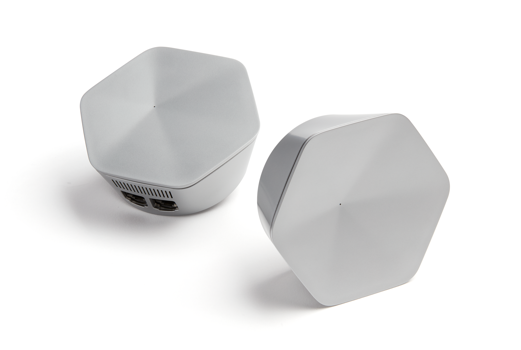
Wi-Fi 6,
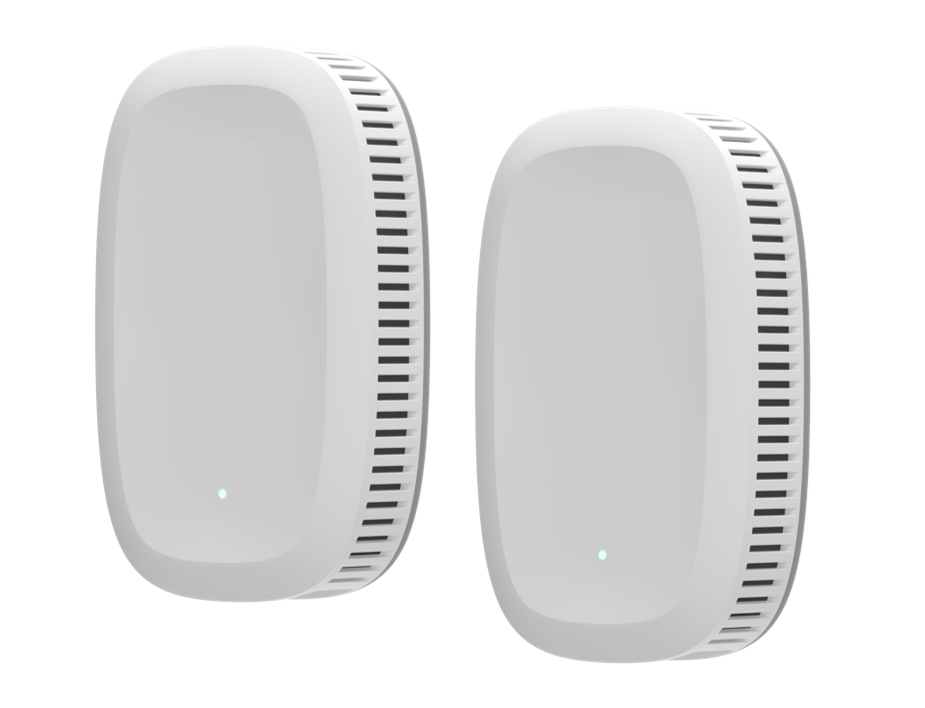
or Wi-Fi 7:
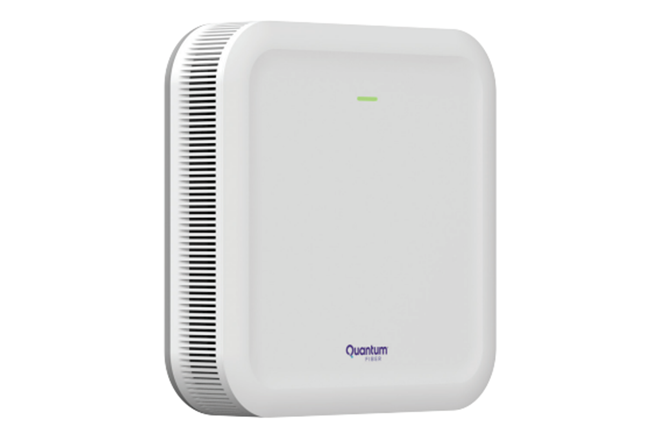
OR, you could be using your Own Router connected via Ethernet to the HID.
¿Do you have one of these, which one?
sblehert wrote:
…Currently the IP address is 192.168.0.8 and the Router is set at 192.168.0.1. Exactly how would I “assign myself a new manual IP address close to but not identical to the current one?”
Here is how to set a manual / static / fixed address on the Mac: Use DHCP or a manual IP address on Mac - Apple Support
The concern with this sort of manual network re-configuration is the local DHCP server might be well-written and adapt to the local network, or it might be poorly written and willing issue duplicates and cause address conflicts. Given that concern, the preferred approach here is to either add a reservation into the DHCP server configuration menu in the DHCP server (in the ISP box), or to entirely shut off the DHCP server in the Wi-Fi device and manually configure addresses.
And what does DHCP actually mean?
DHCP is means of sharing the few available local network addresses among many potential Wi-Fi clients.
Assuming the ISP can’t sort this out with firmware and the rest, I’d be inclined to switch the Quantum gateway / firewall / router / NAT box into to its bridged mode, or to replace the CenturyLink / Quantum Wi-Fi box with an optical network terminal, and replace it with your own. (This switch-over appears feasible, but I’m not sufficiently familiar with CenturyLink / Quantum configurations to be certain this will work. Put differently, somebody local may have to set this up, and it’ll mean you won’t be able to call Quantum for Wi-Fi support. Nit that being able to call has been all that helpful here.)
I don’t see much in the way of manuals for this (apparently) Gemtek W1700K Wi-Fi box, either. Which makes all of this more difficult.
the usual way that tends to be trouble free is to set it to use Dynamic Host Configuration Protocol (DHCP).
when your Mac initially starts up, it asks the router for an IP address from the range of local IP address, and uses that one. If your Mac sleeps, it technically releases that DHCP address. When your Mac wakes up, it asks to 'renew DHCP Address'. if available, the Router says "go ahead and use that" else it sends a different one.
somehow, your network seems to be getting confused, and I don't know why.
if you change the IP address from DHCP to Manual, you can specify your own address near the ones already in use. When you set it back to DHCP, it will likely retain the one you manually assigned, at least for a while.
the pool is generally about 250 address (varying in the lowest octet). so any number form the router address at 192.168 0.1 to 192.168.0.250 should work, unless they clash with an existing device.
I think if you disable and then re-enable Wi-Fi, it should give you a new address and aviod the issue.
If not, Restart your Mac.
I have spent way too much time trying to solve this problem. At first, QF, claimed it was a problem with my computer, since they "refreshed" my signal, and saw no problem on their end. I uploaded a newer OS onto this computer - with much difficulty because of the unreliable internet connetion. I also spoke with Apple Support technicians over the phone multiple times - they shared my screen to try to find an issue - we got disconnected several times, since the wi-fi connection disconnected itself - and nothing was obviously wrong with the computer according to the phone support personnel. I finally made an appointment and went into the Apple Store at Ridgedale, and met with a very patient and helpful "genius" there. I spent 2 hours there, downloaded the newest OS available for this computer, using the store's "reliable internet connection", then he checked various things on the computer. He also did a complete hardware diagnostic test on my computer, and everything checked out fine. The internet stayed connected at the Apple store. So now I'm thinking it's definitely a problem with my QF connection. I explained all of this to a QF customer service person, who was not helpful at all. Then last Friday night our modem accidentally became unplugged from the wall. We plugged it back into the wall outlet, rebooted the system, and "magically" it seemed fixed - worked for more than 2 hours straight the next day!! However, it has recently started acting up and disconnecting about every 15 minutes now - instead of every 5 minutes like before. I called QF customer service again to explain the latest developments, and the rep listened, and said that she changed something (I think she said that she changed DMS on the modem setting to static), and that we should see if that helps. If not call back again, and she'll send a technician to our house to further investigate this issue. I haven't done that yet, but that's my plan for tomorrow. This is all so frustrating, since the old Centurylink wifi worked perfectly on all of our devices!!
<< So now I'm thinking it's definitely a problem with my QF connection.>>
it might be. but if is more likely to be a problem between your computer and your Router.
If you would post the parameters, Readers can tell you what is happening in your 'network neighborhood', and whether your router is mis-configured or a whole host of other issues.
You already have a 2.4 GHz connection. your Option Wi-Fi report showed you were using it.
Most folks do not rely on tech support, but simply surf (with a web browser) to the Router address, and log in to the Router adminisration screen directly. Your Router is at 192.168.0.1 according to your report. Sometimes the default username and password is printed on a label on the back of the Router. In other cases, you may need to download the Router manual.
This gives you access to many tools to make changes yourself, instead of relying on folks who do not appear to be very helpful.
¿What make&model Router?
<< I connected the old one from Century Link via Ethernet to the QF set up and the 5G network came up. >>
that suggests your Quantum 360 Router is not sending on the 5 GHz channel.
as I recall, you were stuck with only a modest 2.4 GHz connection on channel 11, and no way to connect on 5 GHz at all.
you could use Wi-Fi preferences to assign your self a Manual IP address close to, but not identical to that one, and that would get you working again. When you change back to DHCP, it will likely-y stay on the manual IP address you assigned for quite a while.
Have you cycled the Power to your Router OFF, counted to twenty, then power it up again? That SHOULD randomize all the IP address again.
what is the status shown in
system Preferences > Network > Wi-Fi ??
Internet connectivity issue on MacBook Pro with Quantum Fiber service